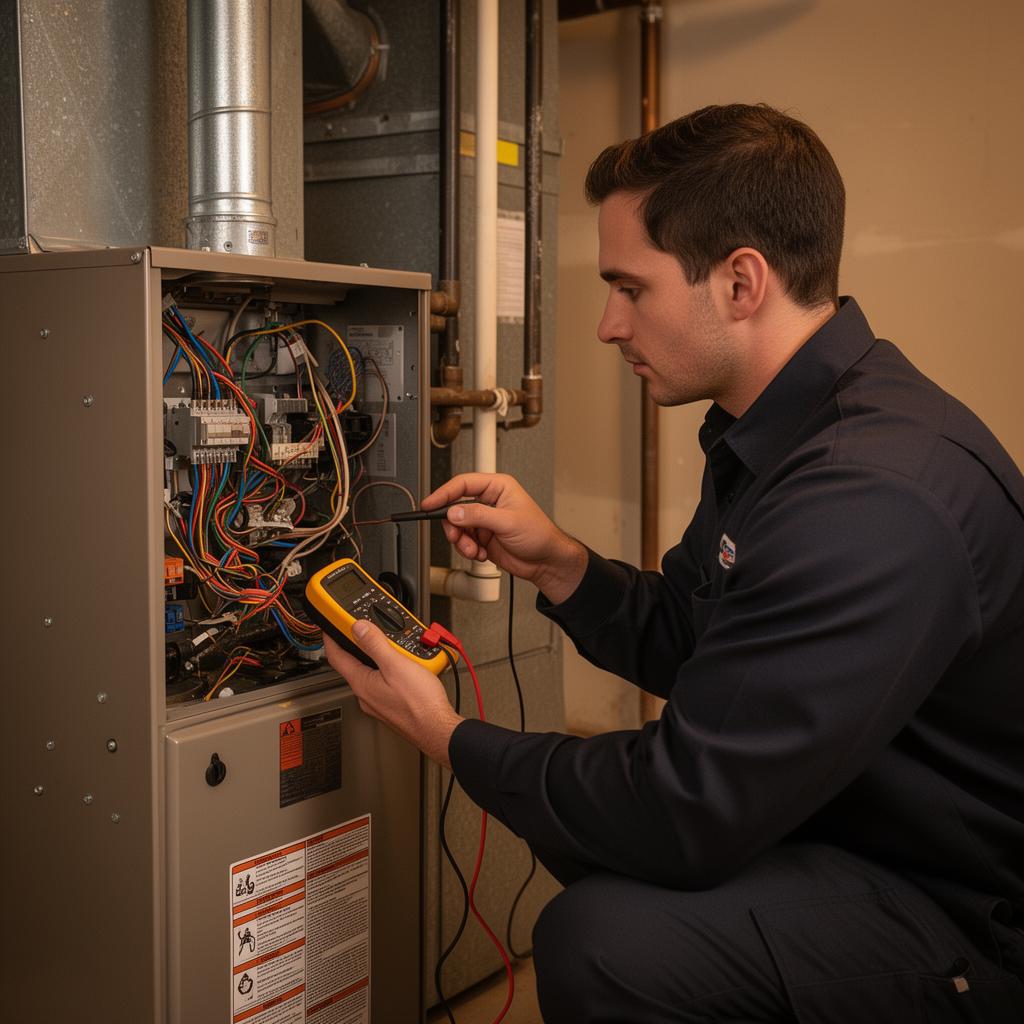
HVAC problems we repair
- No heat overnight with sub-freezing temperatures
- No cooling during a Kansas City heat advisory
- Burning smell, smoke, or sparks from the system: shut it off
- Carbon monoxide detector going off near the furnace
- Water leaking heavily from the indoor unit or condensate line
- System tripping the breaker repeatedly
Our service process
- Discussion of the failure and current service availability
- Diagnostic checks of the affected heating or cooling system
- Identification of the failed component and repair options
- System operation checks after the repair
What affects cost and timing
- Diagnostic work and labor required for the repair
- Whether the part needed is on-truck or requires a supplier pickup
- System age and accessibility
- Whether the underlying issue is a quick fix or a deeper failure
When it's urgent
- Vulnerable household members: infants, elderly, anyone with health issues
- Indoor temperatures dropping toward freezing in winter
- Indoor temperatures above safe limits in extreme heat
- Any gas smell or CO alarm: leave the home and call the gas utility
- Visible flames, smoke, or burning smells
Before your service request
- If you smell gas: leave the home immediately and call the utility from outside
- If a CO alarm sounds: open windows, leave the home, and ventilate
- Shut the system off at the thermostat and breaker if it's making bad noises
- Note exactly what you observed and when: it speeds up diagnosis
- Have system brand and model ready if it's safe to access
Need help right now?
Call us to discuss urgent heating or cooling repair availability. For gas smells, carbon monoxide alarms, or fire, leave the home and contact emergency services first.
(816) 300-3383Related HVAC services
FAQ
Any situation involving safety (gas, CO, fire risk), threats to vulnerable household members, frozen pipe risk, or extreme indoor temperatures qualifies. For gas smells, carbon monoxide alarms, or fire, leave the home and contact emergency services before arranging HVAC repair.