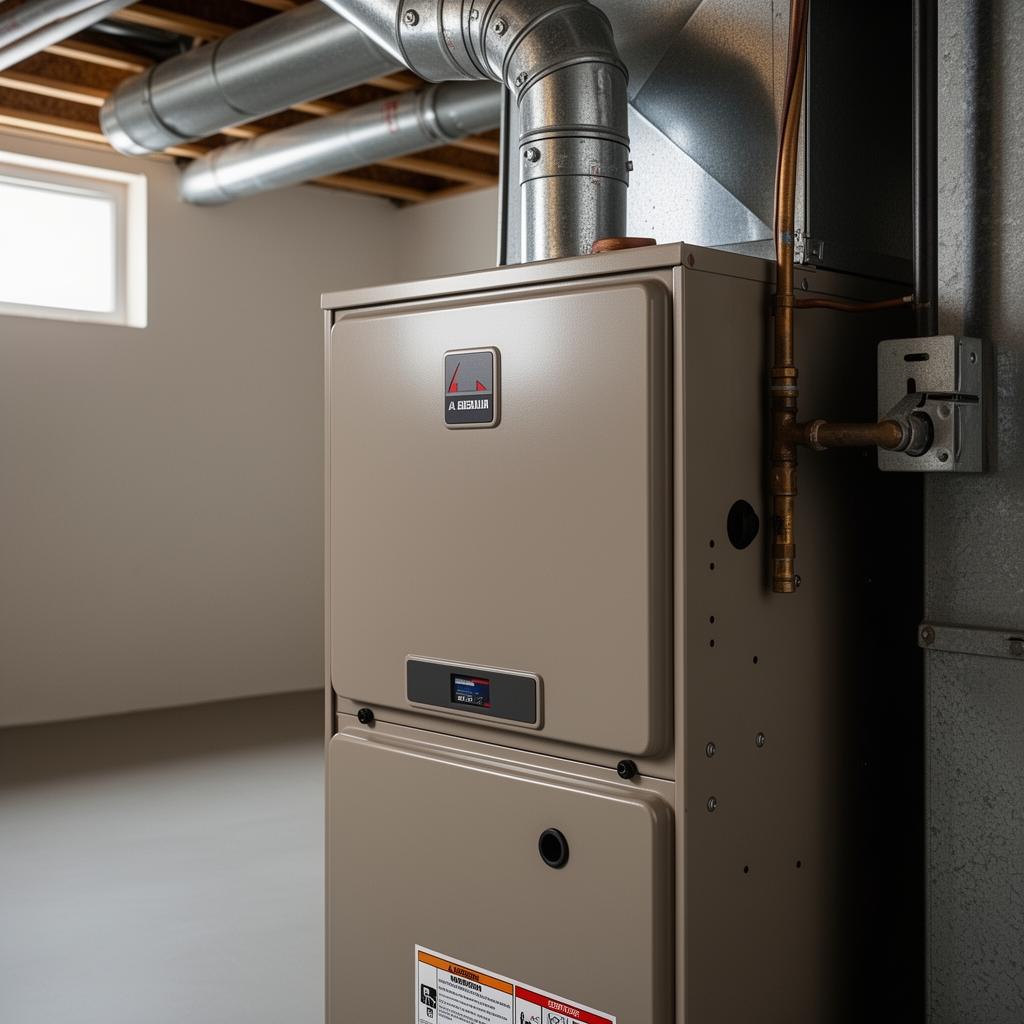
Common causes
1. Thermostat problem
Dead batteries, wrong mode, a setpoint below room temperature, or a tripped circuit on a smart thermostat will all leave the furnace silent. Check the thermostat first every time.
2. Tripped safety switch
Furnaces have several safety switches — high limit, rollout, pressure switch, door switch. A clogged filter or blocked vent can trip these. Never bypass a safety switch; they protect against carbon monoxide and fire.
3. Dirty flame sensor
A common cause of short cycling — the burners light, the flame sensor can't see the flame, and the system shuts off in seconds. Cleaning the flame sensor is a routine tech task.
4. Failed ignitor
Hot surface ignitors are wear items and eventually crack or burn out. Symptoms include no ignition attempt, repeated reset cycles, or visible glowing followed by no burner light.
5. Clogged air filter
Restricted return airflow causes the heat exchanger to overheat and the high-limit switch to trip. Replace filters every 1–3 months in winter.
6. Pilot or gas supply
On older furnaces, a pilot light may be out. On all gas furnaces, the gas valve to the appliance can be turned off. If you smell gas at any point, leave the home and call the utility.
What homeowners can safely check
- Thermostat: mode set to Heat, setpoint above room temp, batteries fresh.
- Furnace switch (looks like a light switch near the unit) is on.
- Breaker for the furnace hasn't tripped.
- Air filter — replace if dirty, even if it doesn't look bad.
- Gas service to the home is on and the appliance valve is open.
- Vents and intakes outside aren't blocked by snow or ice.
When to stop DIY and request help
- Any gas smell — leave the home and call the gas utility immediately.
- Carbon monoxide detector alarm — leave the home, ventilate, request service.
- Yellow burner flame instead of steady blue.
- Repeated short cycling or constant resets.
- Booming or banging at ignition.
- Visible scorch marks, smoke, or melted components.
Cost and timing factors
Flame sensor cleaning and ignitor replacement are typically single-visit repairs in the low-to-mid hundreds. Inducer motors and control boards run mid-hundreds to over a thousand. Heat exchanger cracks are major repairs and typically prompt a repair-vs-replace decision, especially on systems over 15 years old.