What actually drives HVAC repair pricing
Five things shape almost every repair invoice: the cost of the part itself, the labor time to diagnose and replace it, accessibility (attic, closet, crawlspace), refrigerant requirements, and after- hours or peak-season scheduling. None of those have anything to do with the brand of your system or the size of the company quoting it.
Typical repair cost ranges
These are general Kansas City–area ranges based on commonly replaced components. Actual pricing varies by company, system, and condition.
- Capacitor or contactor replacement — usually a few hundred dollars including diagnostic.
- Flame sensor cleaning or ignitor replacement — low to mid hundreds.
- Refrigerant leak diagnosis plus repair plus recharge — mid hundreds to over a thousand depending on leak location and refrigerant type.
- Blower motor replacement — mid hundreds to low thousands, especially for ECM motors.
- Control board or inducer motor — mid hundreds to over a thousand.
- Evaporator coil or heat exchanger replacement — typically a significant repair; often compared against full replacement.
- Compressor replacement on an older system — frequently the point at which replacement makes more sense than repair.
What homeowners can safely check first
- Air filter — restricted airflow causes many no-cool, no-heat, and freeze-up calls.
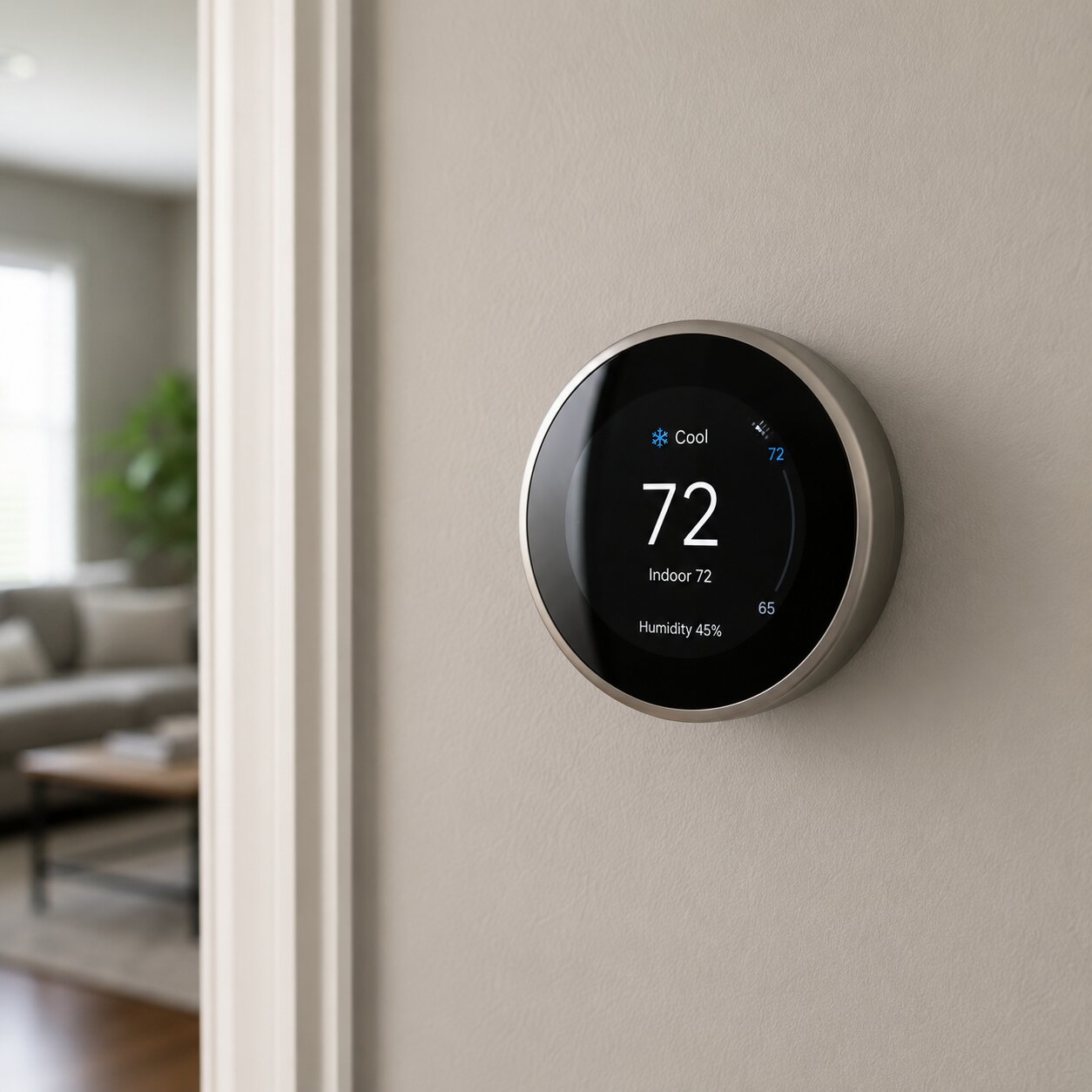
- Thermostat — set to the right mode, batteries fresh, setpoint clearly above/below current temp.
- Breaker and outdoor disconnect — both can trip.
- Outdoor unit area — clear leaves, grass clippings, and snow drifts.
When to stop DIY and request help
Anything involving gas, refrigerant, sealed-system work, or opening a furnace cabinet beyond the front panel belongs to a tech. So does any system that's tripping breakers, showing burn marks, or making sounds it didn't make yesterday. Running damaged HVAC equipment to "see if it gets better" is the most expensive thing you can do.
Repair or replace?
A common rule of thumb is to weigh the repair cost against replacement cost and system age. If a single repair runs more than 30–40% of replacement cost and the system is 12+ years old, the math usually favors replacement — especially with R-22 systems where refrigerant is expensive and scarce. For newer systems under good maintenance, repair almost always wins.
How to avoid being upsold
- Ask for the specific failed part, not just "the system is bad."
- Ask for the diagnostic readings the call was based on.
- Get a second opinion before agreeing to full replacement of equipment under 10 years old.
- Beware of free diagnostics paired with high replacement quotes.